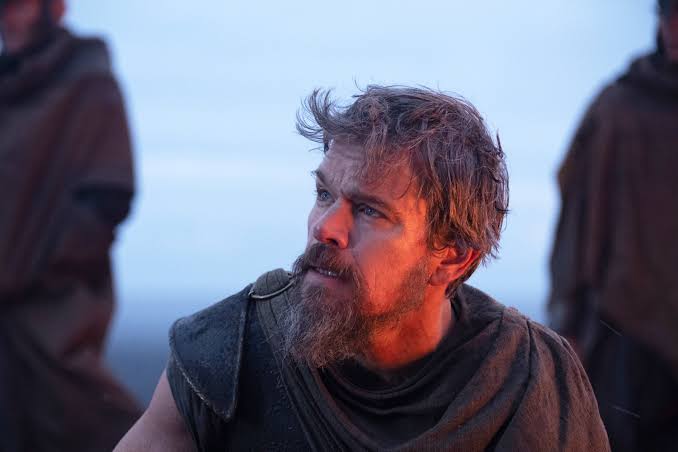






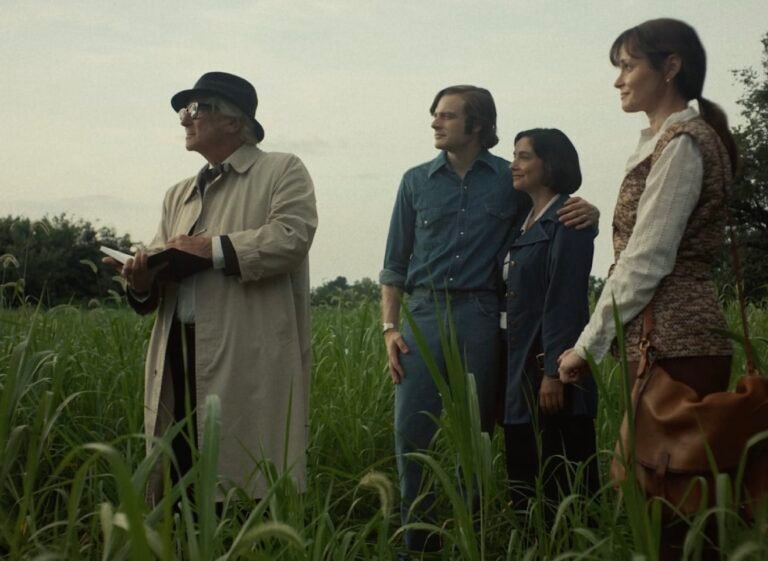
Filmmaker Max Korman grew up inside the Korman House. For his film about its architect, the building became both a location and a way of seeing.
Long before Max Korman became a filmmaker, he was learning to see the world through the windows of a Louis Kahn-designed home. As a child, he would watch a tree sway outside his bedroom window, its movement framed by the house’s nearly square proportions. “It almost felt like watching a movie,” he recalls. Decades later, that childhood memory would help shape the visual language of Joy Will Prevail, inspiring the film’s 4:3 aspect ratio and transforming the architecture of his childhood into a creative influence behind his directorial debut.
Korman grew up in the house designed by Louis Kahn for his grandfather, Steven Korman. His film follows the final three years of the architect’s life, with Griffin Dunne playing Kahn and Ben Rosenfield playing Steven. It was filmed in the actual house, giving its interiors a role beyond that of a period backdrop.
Joy Will Prevail premiered at the 35th Philadelphia Film Festival on October 21, 2026, bringing Korman’s architectural portrait back to the city where the house at its centre stands. Filmed inside the actual Korman House, the film offers an intimate perspective on the relationship between architecture and the lives unfolding within it.
Korman describes a building whose monumental forms never felt remote from everyday life. “The second floor is designed like a forum; the chimneys have the presence of columns; and the house is built with natural materials like wood and stone,” he says. “Growing up there, I never experienced architecture as something cold or theoretical.”
That experience shaped the film’s camera positions. Some shots look up at the chimneys, recalling Korman’s view of them as a small child. Others place the characters in extreme wide shots, letting the architecture dominate. The first shot finds Steven standing at a window, with the camera at his height. “In that moment, human and architecture are equals,” Korman says. He wanted the house to move between these scales “as if it were responding to the characters’ needs.” Rather than treating the house as a static architectural achievement, Korman allows it to reflect the emotions of its inhabitants, shifting between monumentality and intimacy as the story unfolds.
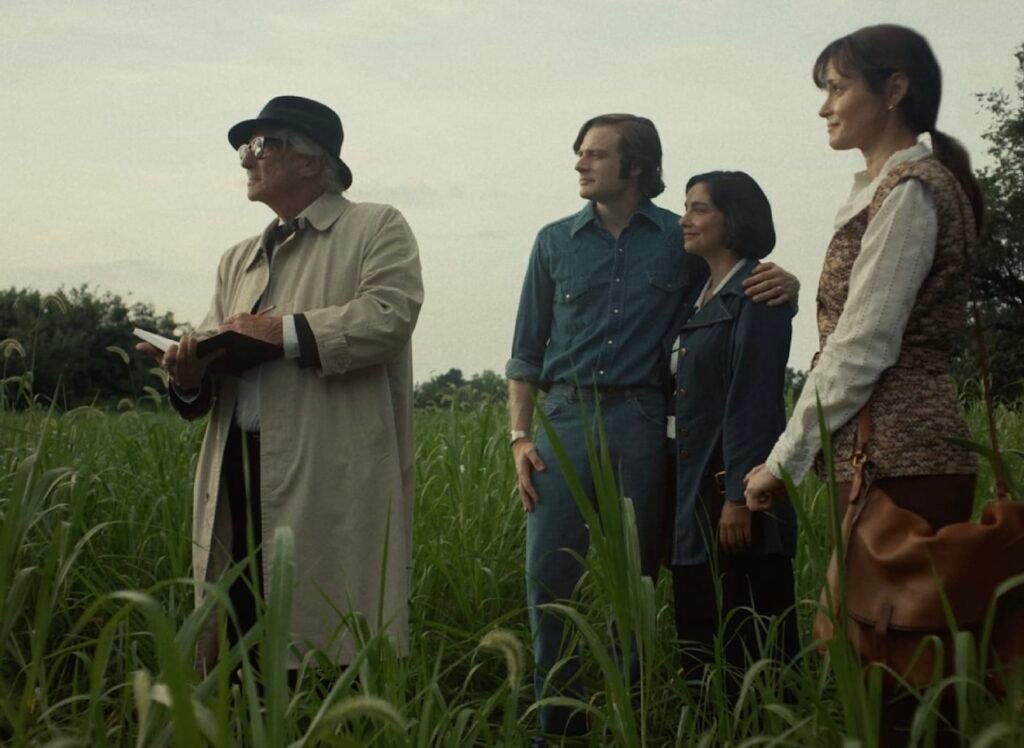
Kahn’s approach to materials informed the images too. When Korman faced a visual choice, he asked himself, “What would Louis Kahn do?” In scenes belonging to the architect’s world, the camera is generally still or carefully controlled. The colour grade protects “the grain of the wood, the imperfections in the brick.” Steven’s family life, by comparison, gave Korman room for more handheld movement and a looser use of colour.
Yet for Korman, the house’s greatest influence extended beyond its physical design. In 2023, while reading an old interview with his grandfather, he discovered that Louis Kahn had played the living room piano during a dinner celebrating the house’s completion, just weeks before his death. It was the very same piano on which Korman had learned to play. “That idea of legacy moved me deeply,” he says. “And suddenly, the whole film came to me in a flash.”
The relationship at the film’s centre is architectural in its own way, built through exchange. Korman calls Kahn and Steven’s bond “essentially a father-son relationship, but one that moves in both directions.” Research also brought the architect down from the pedestal on which Korman had placed him as a child. “The more I learned about him, the more human and peculiar he became.”
Making Joy Will Prevail meant returning to Kahn’s drawings and site reports, listening to family memories and bringing a film crew into a cherished home. Korman emerged with a fuller sense of the people who made the house possible: “It was a true labor of love, from Kahn, Pattison, and my grandparents.”
More than five decades after Louis Kahn’s death, the Korman House remains a living expression of his architectural vision. Its windows, brick and towering chimneys continue to shape the experiences of those who inhabit it, just as they shaped the imagination of a young boy who would one day return with a camera. Through Joy Will Prevail, Max Korman offers something beyond a portrait of a celebrated architect: a deeply personal exploration of how the spaces we inhabit become part of who we are.