




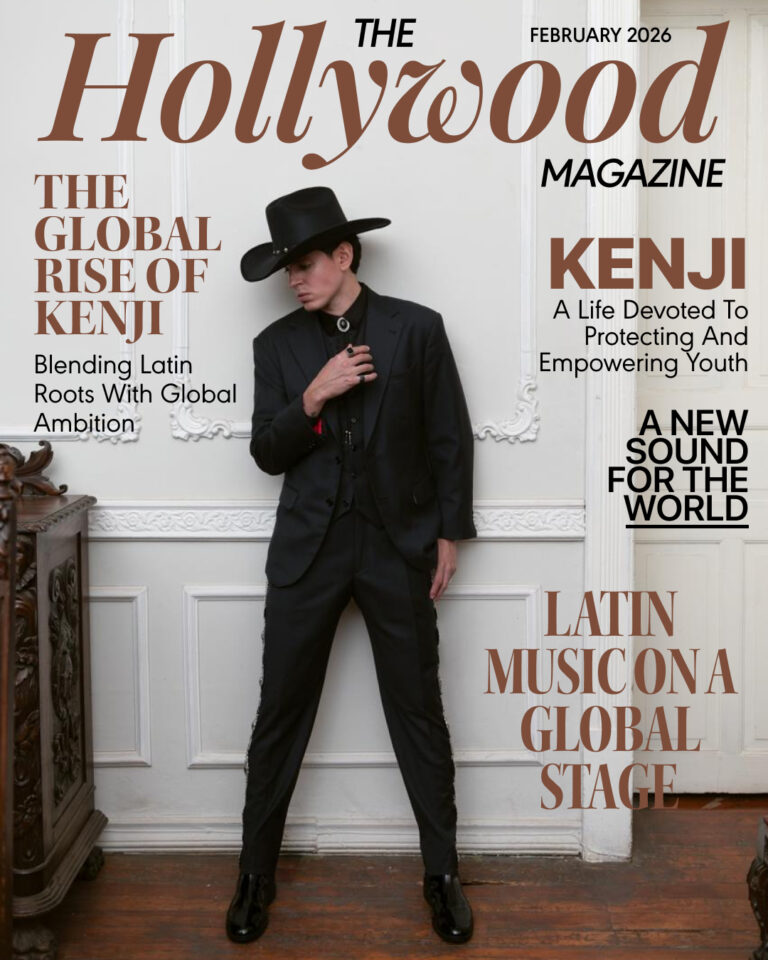
In an industry constantly chasing the next big wave, Kenji isn’t just riding one—he’s building his own. Born in Sinaloa, Mexico, and now moving fluidly between Los Angeles, Miami, and Mexico City, Kenji represents a new generation of Latin artists: globally connected, genre-fluid, and proudly rooted in heritage. With collaborations linked to Grammy-winning producers and legends like Los Tigres del Norte, his journey is proof that Latin music is not just having a moment—it’s rewriting the rules of global culture.
The Digital Era of Latin Sound
Kenji credits the meteoric rise of Latin music to the breakdown of traditional gatekeeping. “Today, all you need is a phone and internet to access music from anywhere,” he says. No longer restricted by local radio, audiences now drive demand, leading to viral success across platforms. And it’s not just reggaeton that’s booming. Kenji reminds us that Latin music is a mosaic of genres—from cumbia and salsa to pop and regional Mexican.
Cultural Fusion Without Borders
He calls “Despacito” a turning point for the entire industry. The viral hit didn’t just dominate charts—it shattered the myth that Spanish and English couldn’t mix. “That moment changed everything,” Kenji says. “Artists became more open to collaboration, and the industry responded.” That open-minded spirit defines Kenji’s own music, which seamlessly blends R&B, hip-hop, regional Mexican, and urban influences.
Guided by Legends, Grounded in Craft
Behind the scenes, Kenji sharpened his sound working with icons like Darius “Deezle” Harrison, the Grammy-winning producer behind hits for Drake, Lil Wayne, and Jennifer Lopez. “Deezle is more than a mentor—he’s family,” Kenji says. Through that partnership, Kenji learned the discipline and humility that separate stars from legends. His respect for tradition is clear in his work with Los Tigres del Norte, where he soaked up lessons in consistency, character, and authenticity.
Not Just a Peak—A Movement in Motion
While many say Latin music has reached its peak, Kenji sees it differently: “This is the best it’s ever been—but the real prime is still coming.” With artists like Bad Bunny headlining the Super Bowl and festivals around the world embracing Latin headliners, the shift is irreversible. Kenji hopes to be the first Mexican artist to headline the halftime show himself one day.
Sound as Identity
Kenji doesn’t like labels. He resists the urge to define his sound by a single genre, preferring instead to describe it as “lightning.” To him, music is a lifestyle. From his VW sedan to his streetwear edge, everything about Kenji bridges cultures. “Kenji doesn’t make a genre—Kenji makes music.”

A Grammy Dream Realized
In 2025, he attended the Latin Grammys for the first time, a surreal full-circle moment for the artist who once watched the awards on TV as a kid. “Being there while competing for Best New Artist was emotional. But I know it’s just the beginning.”
Kenji isn’t chasing trends. He’s carving a lane that didn’t exist before—rooted in Mexico, inspired by the world, and powered by a relentless passion for music. In a time where artists are expected to fit inside neat boxes, Kenji shows that the real power lies in breaking them.
Interview with Kenji
1. Latin music has become a global movement that goes far beyond Mexico, gaining strong momentum from Colombia, Puerto Rico, Panama, Argentina, and other countries. From your perspective, what has driven this global takeover?
Absolutely—Latin music is increasingly recognized worldwide, and I believe this is due to many factors. One of the most important is social media. Today there are no real limits; people are free to choose what they listen to. In the past, the radio stations in your city dictated the music you could access. Now, all you need is a cellphone and an internet connection to discover music created in another language or country.
This applies both to audiences and artists. As an artist, you can meet, connect, and collaborate with other singers and songwriters through social media as well. Many great songs being released right now were born from connections made online. Latin music is pure diversity—it’s not just reggaeton. It’s regional Mexican, cumbia, salsa, pop, vallenato, and more.
2. We’ve seen major crossovers between Latin and Anglo music, such as Justin Bieber’s involvement in “Despacito.” How do you think this cultural fusion is transforming the music industry?
I love talking about the case of Despacito because that song marked the moment when all limits for Latin music truly exploded—there’s no better example. The song had already broken every record through the fusion of Luis Fonsi and Daddy Yankee, but when Bieber joined, it took it to an entirely new level—not just in popularity, but by breaking the myth that Spanish- and English-language music couldn’t successfully collaborate.
From that moment on, the game changed. Artists became more willing to combine styles, genres, and cultures, and the industry opened up in a way we hadn’t seen before.
3. You’ve worked with producers and artists behind global hits by Lil Wayne, Drake, Kanye West, and Jennifer Lopez. What lessons did you take from your experience within the Anglo industry?
That’s right—one of the producers I’ve worked with is Darius “Deezle,” an icon in R&B and rap. Collaborating with him has taught me so much. I consider Deezle my mentor; he’s guided my musical path over the past few years.
From him, I’ve learned that discipline is everything. Even though he’s already achieved what many people dream of in this industry, he’s always eager to keep learning. He never stops practicing—whether it’s guitar, bass, or piano. Writing and producing music with him has been one of the greatest satisfactions of my life.
Beyond being a mentor, he’s also a great friend, and having his support inspires me deeply. Working with producers like him gave me the confidence to blend different sounds—hip-hop, R&B, pop—with elements of Mexican music.
4. Many say Latin music is experiencing its best moment. Do you believe it’s at its peak, and where do you see it heading next?
Yes, I truly believe this is the best moment Latin music has experienced so far—but I also think its true “prime” is still ahead of us. We’re now seeing Latin artists headline stages where Spanish-language music once had no space, such as Coachella.
I believe we’ll see more international festivals and platforms focused on Latin music, many more collaborations, artists who have never sung in Spanish doing so for the first time, and, of course, genre and style combinations we’ve never heard before.

5. Moments like Bad Bunny at the Super Bowl mark a cultural turning point. What do these milestones mean to you as a Latin artist?
They inspire me tremendously. After many years without a Latin artist performing at such a spectacular event, we saw Shakira, J.Lo, J Balvin, and Bad Bunny—and now Bad Bunny as a headliner. These are exactly the kinds of moments that continue to elevate our music.
The world is eager to hear and discover more Latin music. A Mexican artist has yet to headline the Super Bowl halftime show, and achieving that with my own music is one of my biggest dreams.
6. Music is often described as a universal language without borders. How do you apply this philosophy to your creative process and collaborations?
When people meet me, they usually ask, “What genre of music do you make?” It’s difficult for me to answer, so I usually say, “You’d have to listen to it.” One day I might write something that sounds more pop, another day something closer to regional Mexican, and another day something leaning toward R&B.
That’s the beauty of music—you don’t have to box yourself into one genre. It’s an art form that allows you to experiment and create different styles. I always try to stay open to new sounds, collaborate with songwriters from different genres and generations. That’s where the magic happens—when you’re not closed off.
Some songwriters focus on just one style, and that’s perfectly valid, but that’s not my case. Kenji doesn’t make a genre—Kenji makes music.

7. Your identity revolves entirely around music: production, songwriting, performance, and collaboration. How would you define Kenji as a musical lifestyle?
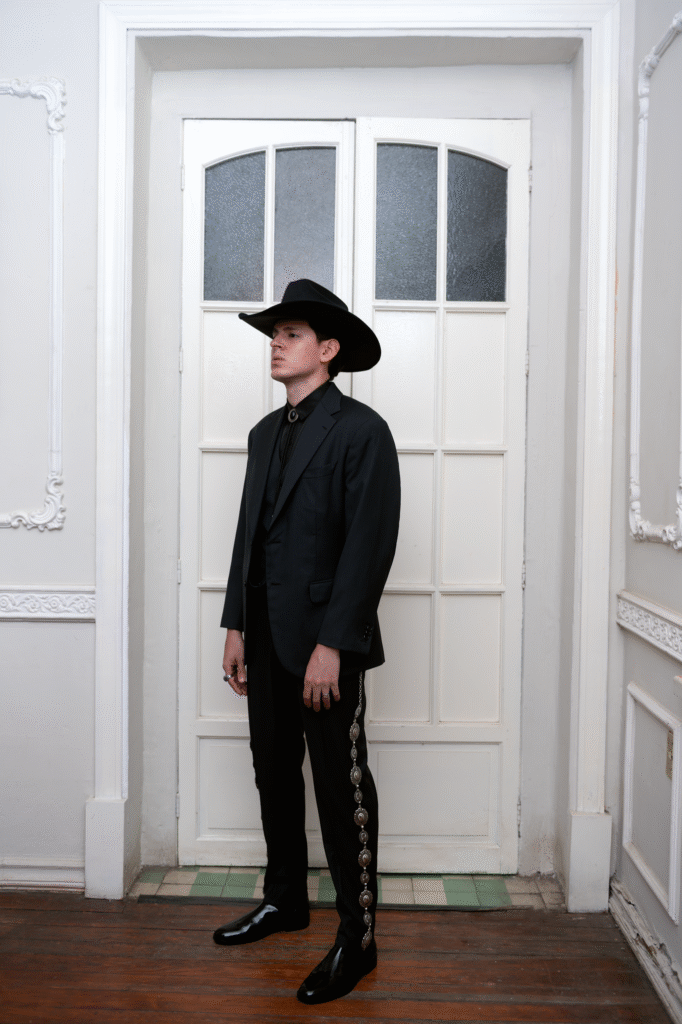
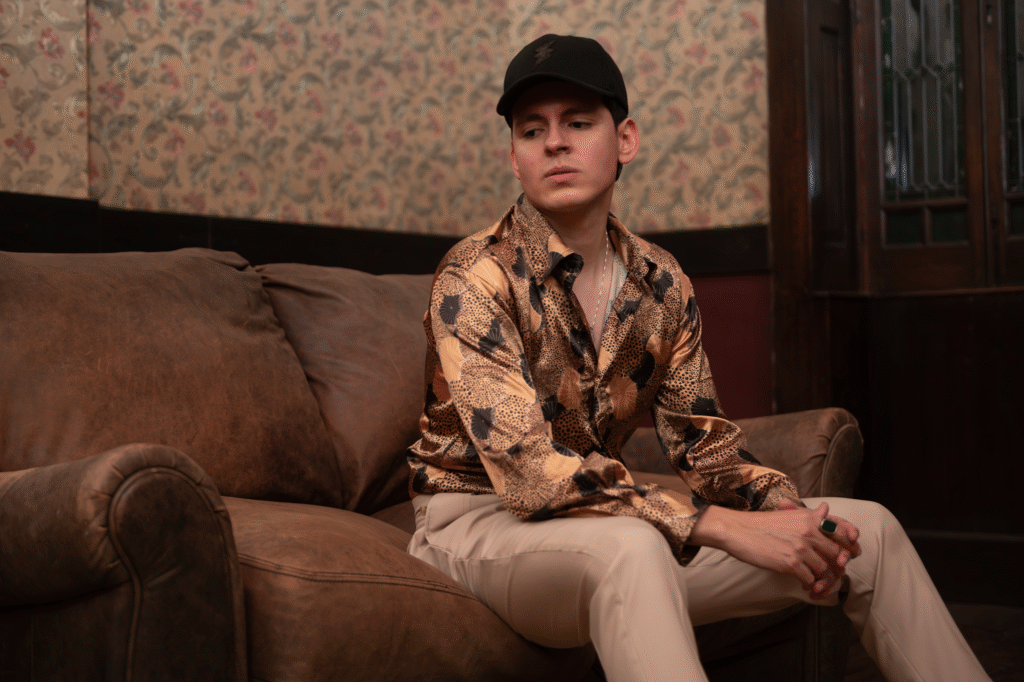
Kenji is lightning—it’s pure passion for music, energy, and freshness. I’m very proud of where I come from, Sinaloa, Mexico, and I try to reflect that in how I dress and even in the car I drive—a Volkswagen sedan, an icon of Mexican culture.
At the same time, I have a strong influence from Anglo urban culture, which I’ve experienced up close. That fusion is reflected both in my music and in my lifestyle.
8. You’ve worked behind the scenes with iconic artists like Los Tigres del Norte. What has collaborating with legends taught you?
Yes, I’ve been fortunate to collaborate and contribute to the careers of other artists, including Los Tigres del Norte. I’m extremely proud of that experience. They are incredible human beings and monumental artists.
Seeing them up close taught me that their success isn’t accidental—it’s the result of discipline and humility. They are always there for their audience. Being around them means learning something positive and new every single day.
9. You constantly move between Los Angeles and Miami, two key industry hubs. How do these cities influence your sound?
Los Angeles and Miami are full of incredible artists. I always pay close attention to what’s happening there because, like Mexico City, they are key centers where much of today’s globally successful music is being created.
I see all these cities as part of one region. It’s no longer “music from Colombia,” “music from Puerto Rico,” or “music from the United States.” America is an entire continent, and music is uniting us more and more.
I try to ensure my art always reflects that diversity. If I write and record a song, I might send it to be mixed in Los Angeles, New Orleans, or Miami, and I’m always open to collaborating with producers and artists from other countries. This is no longer just about Mexican music—it’s about coming together as the multicultural region we are and delivering the best possible result to the audience.
10. In 2025, you were invited to the Grammys for the first time. What did that moment represent for you personally and professionally?
It was definitely a very special moment in my career—to attend the most important event in Latin music for the first time, especially while participating in the Best New Artist category.
While at the ceremony in Las Vegas, I thought about my younger self, watching the awards on television and dreaming of being there one day. Seeing that dream come true filled me with happiness, and I know it’s just the first of many.
CREDITS
Talent:@kenjimusica
Photography: Adrián Martínez @627_photo
Styling: Elié Rodríguez @elie.rdz & Manuel Delgado @manueldelgado.moda
Location: B44 Studio @b44.studio
Editorial Placement Coordination: Too Much PR @toomuchpr