





The Oscar winner opens up about loss, rage, faith, and why the third Avatar film demanded her most emotionally challenging performance to date
Zoe Saldaña has embodied Neytiri for more than a decade, but Avatar: Fire and Ash marks a turning point — not just for the franchise, but for the actress herself. The third installment in James Cameron’s epic saga plunges Neytiri into her darkest emotional terrain yet, transforming her grief into rage and pushing Saldaña into what she describes as her most demanding performance in the series.
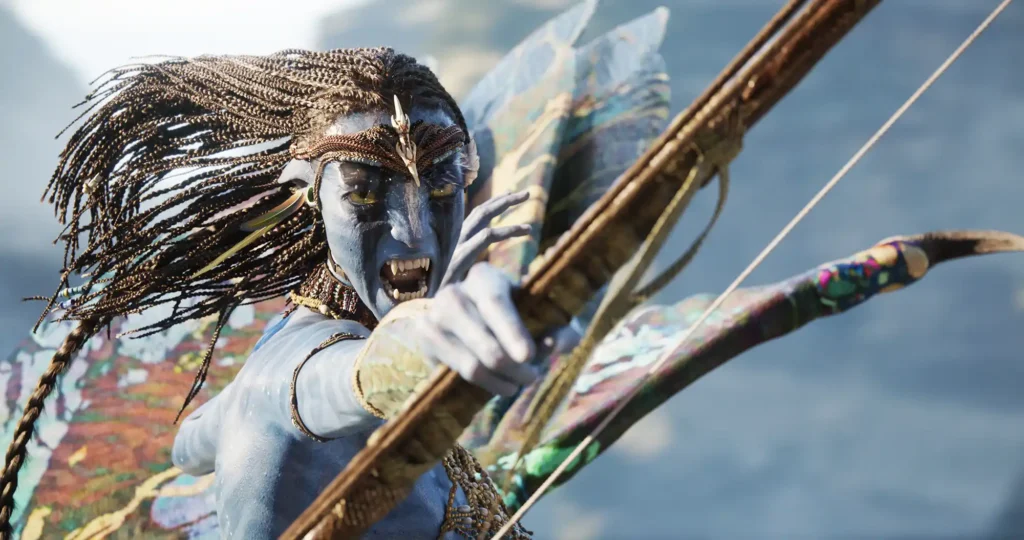
The film’s title is deceptively simple. As Cameron explains, “fire” represents hatred, anger, and violence, while “ash” symbolizes what follows — grief and loss. For Neytiri, those themes are deeply personal. Still mourning the death of her son Neteyam in Avatar: The Way of Water (2023), she enters Fire and Ash consumed by sorrow, her faith fractured and her identity destabilized.
From that grief, hatred ignites.
Neytiri’s pain becomes targeted, particularly toward the Sky People — and most intensely toward Spider, the human boy bonded with her children. Cameron describes her emotional state as being “stuck in an unresolved part of the cycle,” with Spider unknowingly stepping into the crosshairs of her fury. Saldaña agrees that this emotional arc required her to inhabit Neytiri in ways she never had before.
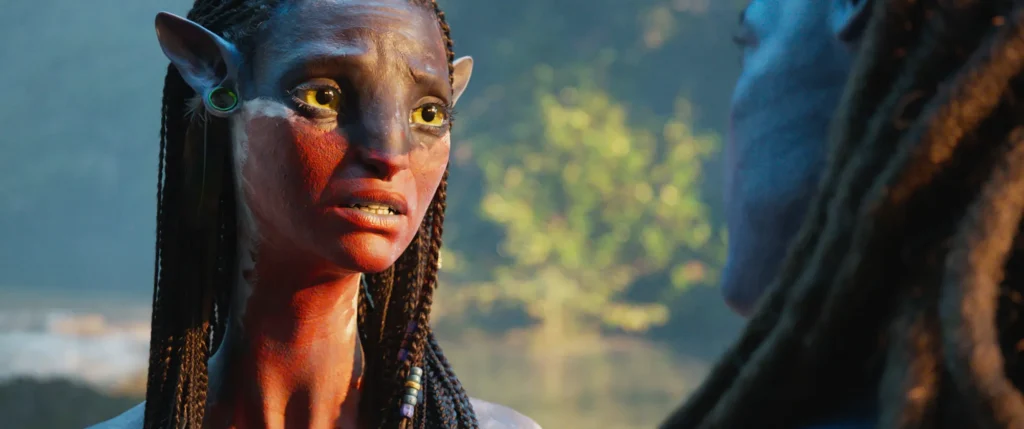
“It was just hard to be in her skin,” Saldaña admits. “Since the beginning, Neytiri has been defined by her faith. In this installment, we find her completely lost, heartbroken, and almost enraged. Her hatred has gotten the best of her, and that blind fury is even challenging her faith.”
The performance demanded emotional extremes. Neytiri is still wearing Na’vi funeral paint when audiences meet her again — a visual reminder that her mourning is unresolved. While Jake Sully processes loss by suppressing it and becoming fiercely protective of his family, Neytiri is left to face her grief alone. Unable to blame her husband, she redirects her anger outward, especially toward Spider, whom she sees as a symbol of everything she fears is corrupting her world.
Cameron doesn’t shy away from the discomfort of that transformation. “She becomes deeply racist, in a way,” he says. “She says it: ‘I hate their pink little hands.’ She can’t understand what feels like insanity to her — a human child influencing her children, pulling them away from traditional Na’vi ways, even as her own children carry human genetics.”
For Saldaña, that hatred was heavy and intoxicating. “She doesn’t think first — she feels first,” she explains. “She ruled with her heart. A lot of her pain and anger manifested physically. That kind of embodiment of rage was extremely rare for me to play, though it felt strangely familiar in an abstract way.”
The challenge was compounded by real life. Avatar: Fire and Ash was shot back-to-back with The Way of Water in New Zealand starting in 2017 — a period when Saldaña was also navigating early motherhood. She had just given birth to her youngest son, Zen, while her twins were still toddlers.
“I was so happy to have my family,” she recalls. “I would say goodbye to them, drive to work, and incarnate this woman experiencing so much trauma and loss. That emotional whiplash was intense.”
To survive it, Saldaña leaned heavily on trust — in her training, in Cameron, and in her fellow cast members, including Sam Worthington and Stephen Lang. She describes the set as a safe, familial environment where vulnerability was not only allowed but necessary.
“There were times I had to walk away from scenes and come back later,” she says. “To do something like this, you need safety, honesty, and people you look up to.”
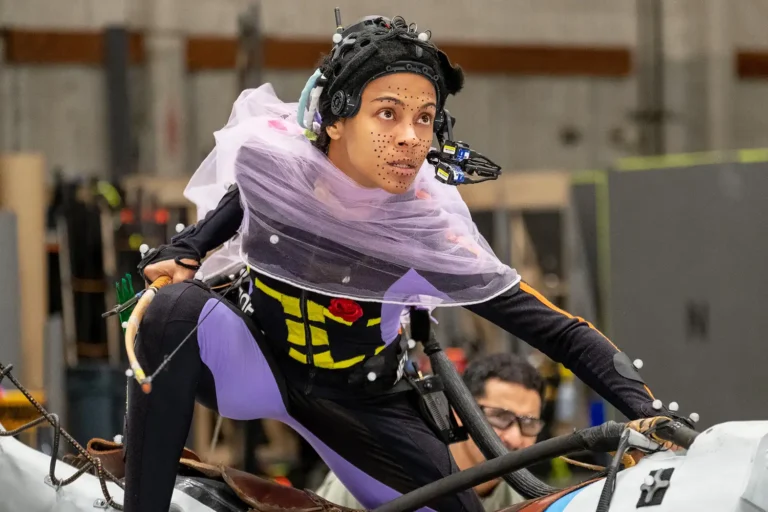
Now 47, Saldaña reflects on how different this experience feels compared to when she first stepped onto the performance-capture stage for Avatar nearly two decades ago. At 28, she was driven by hunger and boundless energy. Today, she brings something deeper — a passion informed by life itself.
“I still have the passion for my work,” she says, “but I’ve acquired a passion for life, too. And that feeds my work. I need experiences to inform what I do next.”
In Avatar: Fire and Ash, those experiences converge into a portrait of grief that burns, scars, and reshapes. For Neytiri — and for Saldaña — it is not just another chapter. It is a reckoning.