


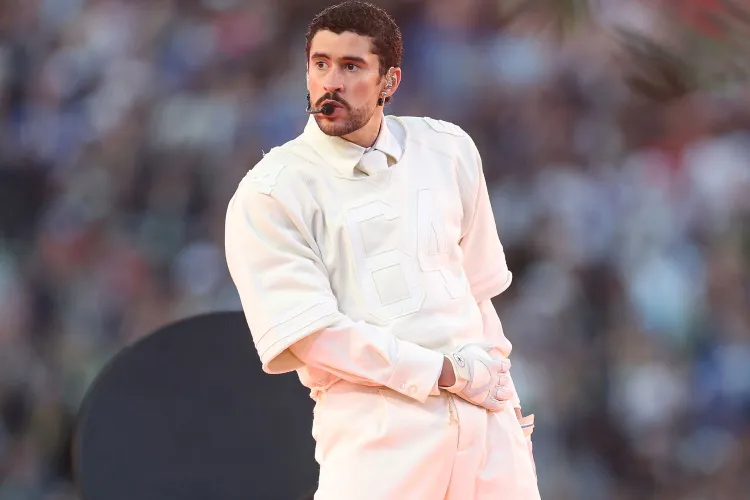
Bad Bunny delivered a historic and deeply personal performance at the 2026 Apple Music Super Bowl LX Halftime Show, becoming the first artist ever to headline the Super Bowl halftime entirely in Spanish. The landmark moment unfolded on February 8, 2026, at Levi’s Stadium in Santa Clara, California, before a global audience watching on NBC, Telemundo, and streaming platforms including Peacock, NFL+, YouTube TV, and Hulu + Live TV.
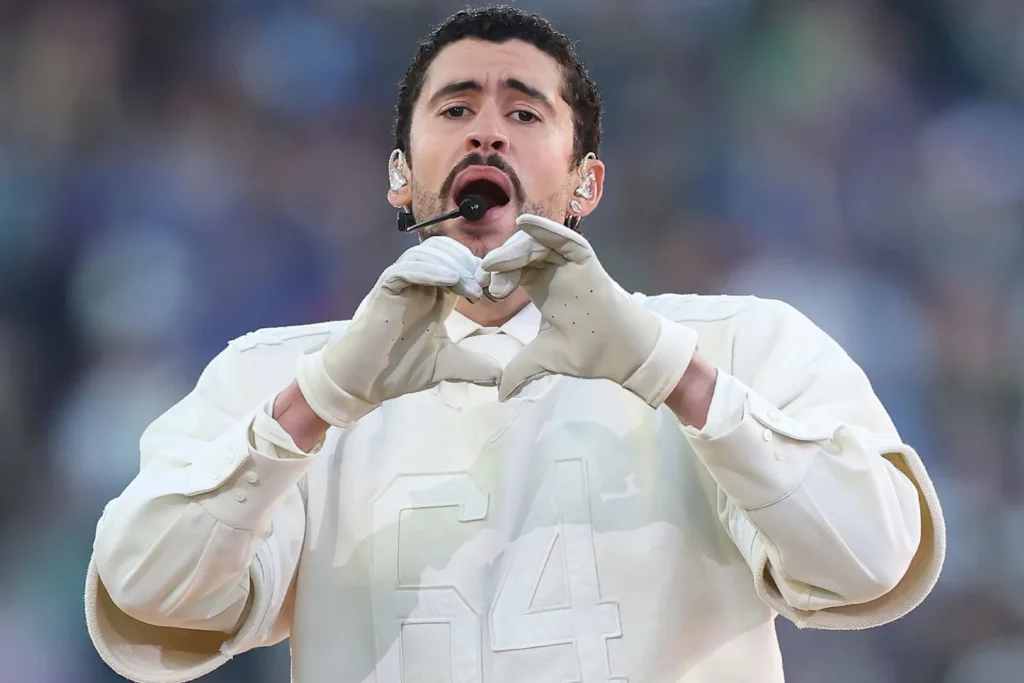
Born Benito Antonio Martínez Ocasio, the 31-year-old Puerto Rican icon transformed the world’s biggest sporting stage into a vibrant homage to his roots, his people, and Latin culture at large—proving that language is no barrier to global impact.
A Halftime Show Rooted in Culture and Storytelling
Bad Bunny opened the performance with “Tití Me Preguntó,” immediately setting the tone for a show rich in cultural symbolism and visual storytelling. Drawing inspiration from his No Me Quiero Ir de Aquí residency, the stage evolved into a cinematic journey through Puerto Rican life—moving from a sugarcane field to a barbershop, then a liquor store, and finally centering on La Casita, a traditional home that became the heart of the performance.
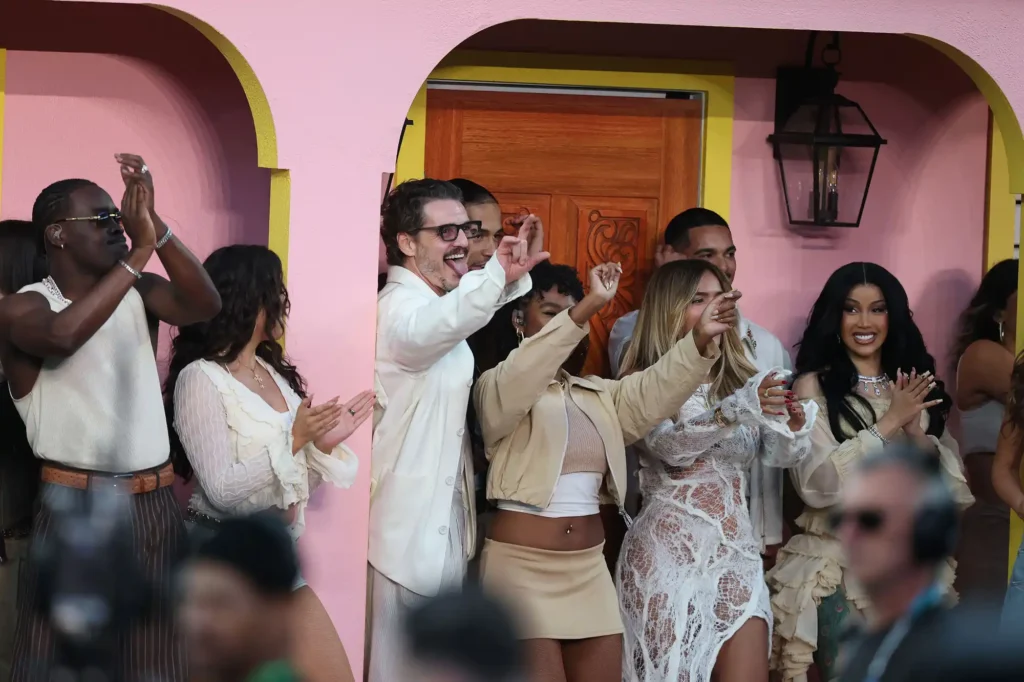
From atop La Casita, Bad Bunny launched into “Yo Perreo Sola,” before welcoming a series of surprise celebrity appearances, including Pedro Pascal, Cardi B, Jessica Alba, Karol G, Young Miko, and more—each adding to the celebratory energy of the night.
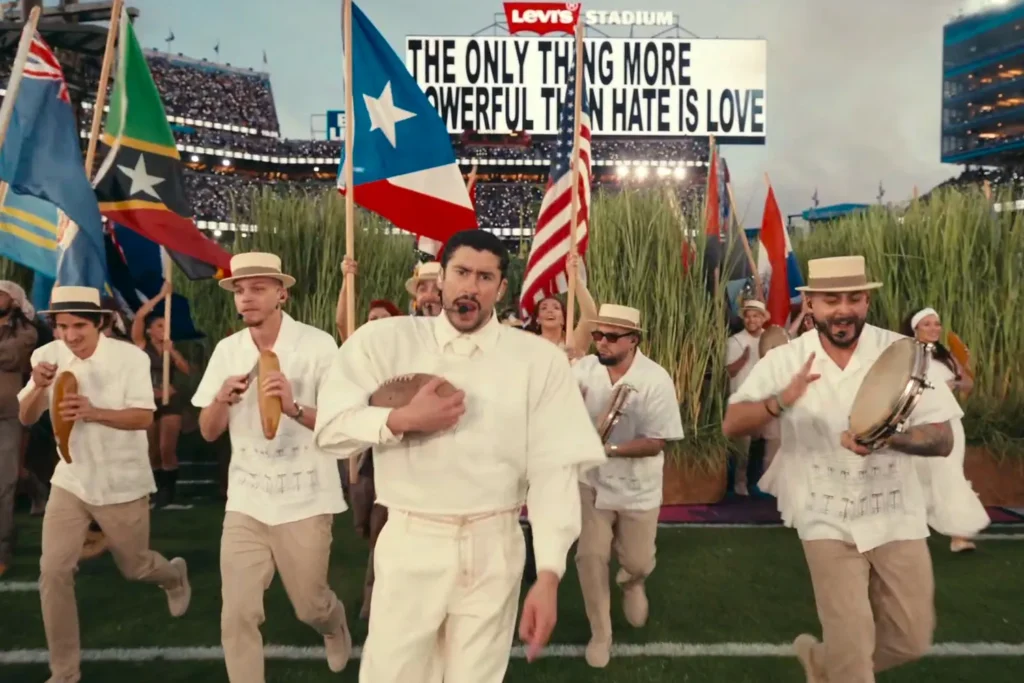
He teased fans with a snippet of “Voy a Llevarte Pa’ PR”, then dramatically “crash-landed” into La Casita, kicking open the door and diving into a full-blown neighborhood block party as he performed “EoO” amid a sea of dancers.
Honoring Latin Music Legends
Throughout the set, Bad Bunny paid tribute to the pioneers who paved the way, weaving in iconic snippets of Tego Calderón’s “Pa’ Que Retozen,” Don Omar’s “Dale Don Dale,” and Daddy Yankee’s “Gasolina.” The homage reinforced the show’s deeper message: this moment was not just personal—it was generational.
Star Power Meets Cultural Fusion
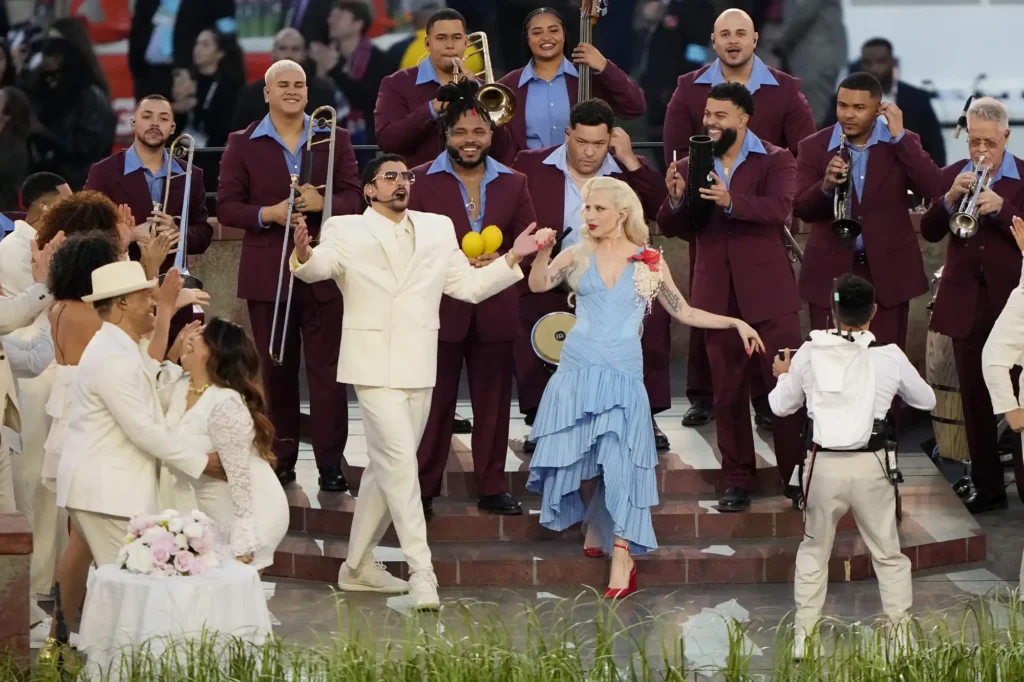
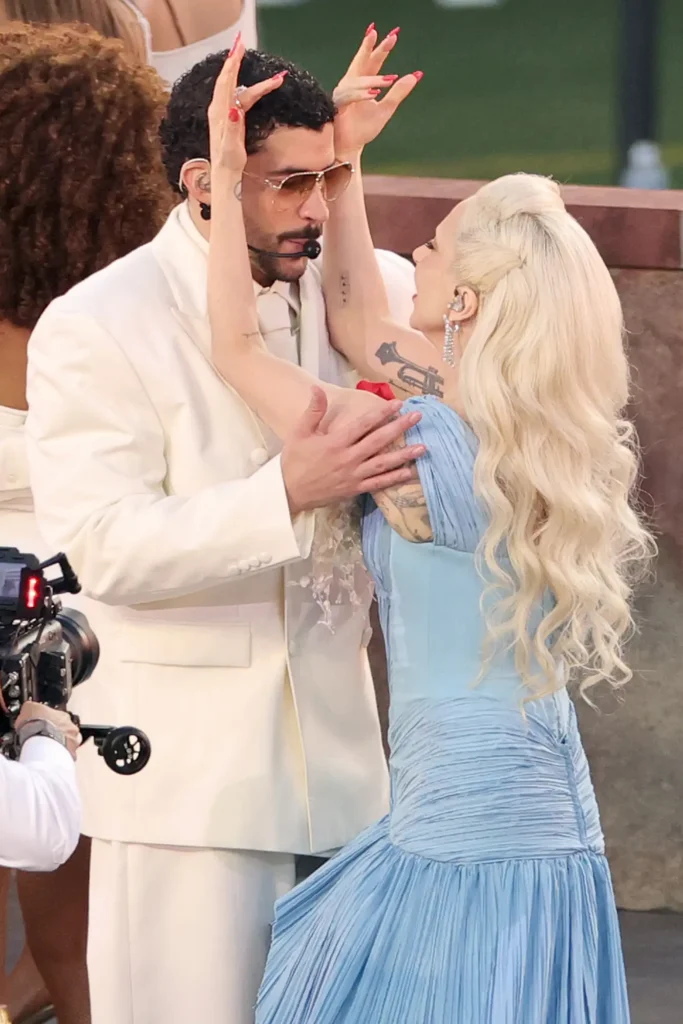
The surprises continued when Lady Gaga appeared onstage in a flowing blue dress, delivering a salsa-infused rendition of her hit “Die With a Smile.” The unexpected collaboration seamlessly transitioned into Bad Bunny’s “BAILE INoLVIDABLE” and “NUEVAYoL.”
In one of the night’s most tender moments, a couple was shown getting married on the field, while Bad Bunny offered a deeply symbolic gesture—giving his Grammy Award to a child watching the performance on television, underscoring the message of legacy and hope.
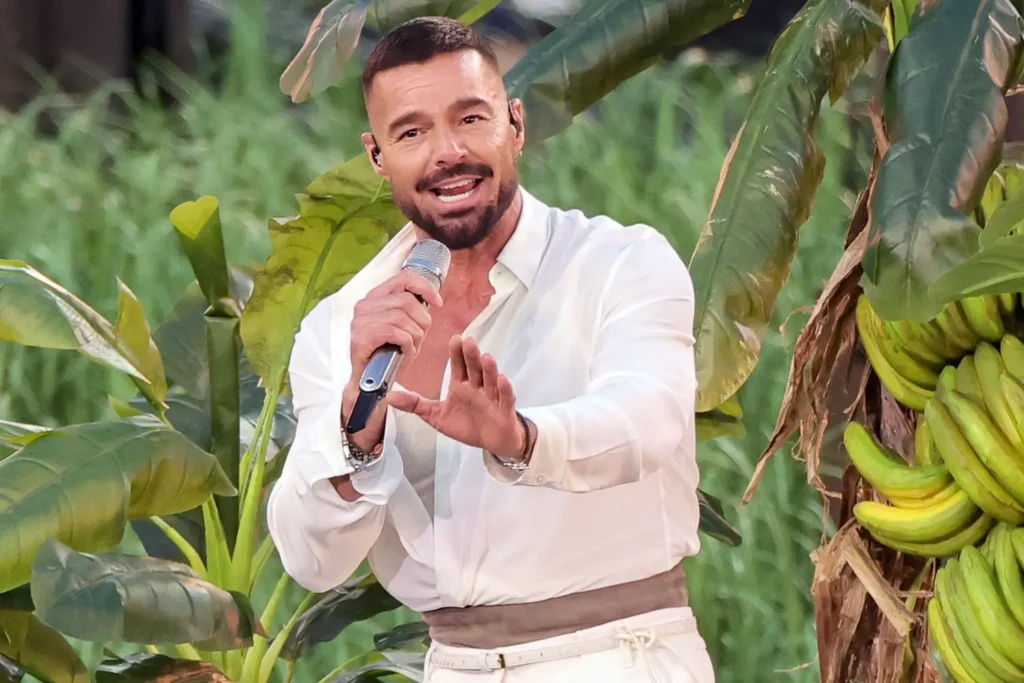
Moments later, Ricky Martin joined Bad Bunny onstage, performing “LO QUE LE PASÓ A HAWAii,” bringing together two Puerto Rican superstars in a powerful, emotional union.
A Finale of Unity and Love
Bad Bunny closed the show with a high-energy run of “El Apagón,” “CAFé CON RON,” and “DtMF.” As fireworks lit up the stadium and the field transformed into a vibrant parade, he addressed the crowd with a message of unity:
“God Bless America. God Bless Puerto Rico. God Bless Mexico,” he said, continuing to name Latin countries in a moment of pan-Latin celebration.
Behind him, a massive billboard delivered the show’s defining message:
“The only thing more powerful than hate is love.”
A Performance Bigger Than Music
Fresh off multiple Grammy wins, including Album of the Year for Debí Tirar Más Fotos earlier in the month, Bad Bunny spoke at the Apple Music Super Bowl press conference just days before the game, emphasizing joy over expectations.
“I just want people to have fun,” he said. “It’s going to be a huge party. Of course, a lot of my culture—but no spoilers.”
The NFL announced Bad Bunny as the halftime headliner in September 2025, teasing the reveal with a social media clip before Bad Bunny confirmed the news himself via Instagram, sharing a sunset beach scene that hinted at the moment to come. In a post on X, he referenced performing just one U.S. date—an intentional decision tied to his stance on immigration issues and his choice to limit U.S. touring during his Debí Tirar Más Fotos World Tour.
Industry Praise and Cultural Impact
Jay-Z, whose company Roc Nation partners with the NFL and oversees halftime show selections, praised the artist’s impact at the time of the announcement:
“What Benito has done and continues to do for Puerto Rico is truly inspiring. We are honored to have him on the world’s biggest stage.”
Bad Bunny himself captured the magnitude of the moment with heartfelt words:
“What I’m feeling goes beyond myself. This is for my people, my culture, and our history… Ve y dile a tu abuela que seremos el HALFTIME SHOW DEL SUPER BOWL.”
A Historic Night in Super Bowl Legacy
Before Bad Bunny took the stage, Green Day opened the ceremony representing Santa Clara, Charlie Puth performed the national anthem, Brandi Carlile sang “America the Beautiful,” and Coco Jones delivered “Lift Every Voice and Sing.”
Bad Bunny follows recent halftime headliners including Kendrick Lamar, Usher, and Rihanna, but his performance stands apart—marking a cultural milestone that redefined what the Super Bowl stage can represent.
A Career-Crowning Moment
Coinciding with the event, PEOPLE Magazine released special English and Spanish-language editions celebrating Bad Bunny’s groundbreaking career, from his early rise to his Grammy triumphs and historic Super Bowl moment.
On February 8, 2026, Bad Bunny didn’t just perform at the Super Bowl—he turned it into a love letter to Puerto Rico, a celebration of Latin identity, and a declaration that culture, when embraced boldly, belongs on the world’s biggest stage.